



Further reading on product security
Frequently Asked Questions
What is the difference between overt, covert and forensic authentication?
Overt features are visible and verifiable by anyone without equipment, which makes them useful at the point of sale and equally visible to a counterfeiter. Covert features are hidden and need a known method or device to read. Forensic features require laboratory analysis and carry the evidential weight needed in court. A serious program layers all three, because each defeats a different attacker.
Why do common anti-counterfeiting measures fail?
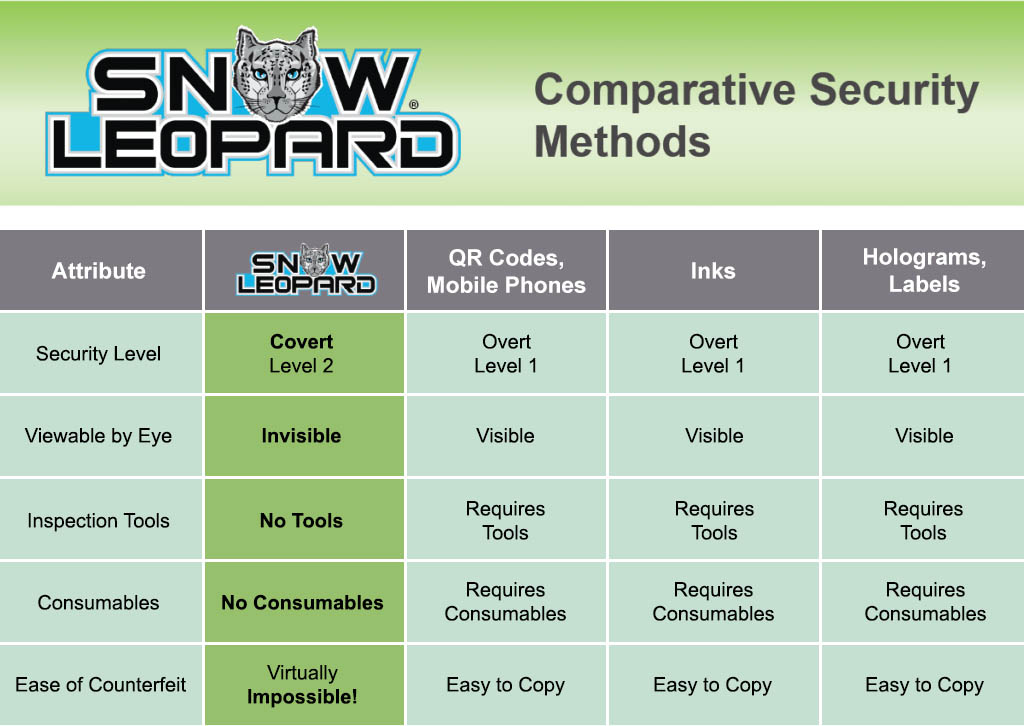
Because most of them are visible, separable from the product and manufactured by someone other than the brand owner. Holograms, labels and printed seals can be sourced, copied or removed and reapplied, and once the feature is on the packaging rather than in the part, the counterfeiter only needs to reproduce the packaging. Features engineered into the plastic part itself do not separate from it.
Can authentication be built into the part instead of applied to it?
That is the approach taken here. Security features are engineered into the plastic component or its material during manufacture, so the authentication travels with the part through the supply chain. Subsurface laser marking, which places the mark inside the material volume without disrupting either surface, and specialized laser additives incorporated into photo and ID cards are documented examples.
How does product security help with diversion and gray-market goods?
Authentication that is unique per unit or per production run lets a brand owner establish not only whether an item is genuine but where it was supposed to go. That distinguishes a counterfeit from a genuine item sold outside its authorised channel -- a different problem, usually needing a different response.
How does SNOWLEOPARD differ from traditional anti-counterfeiting solutions?
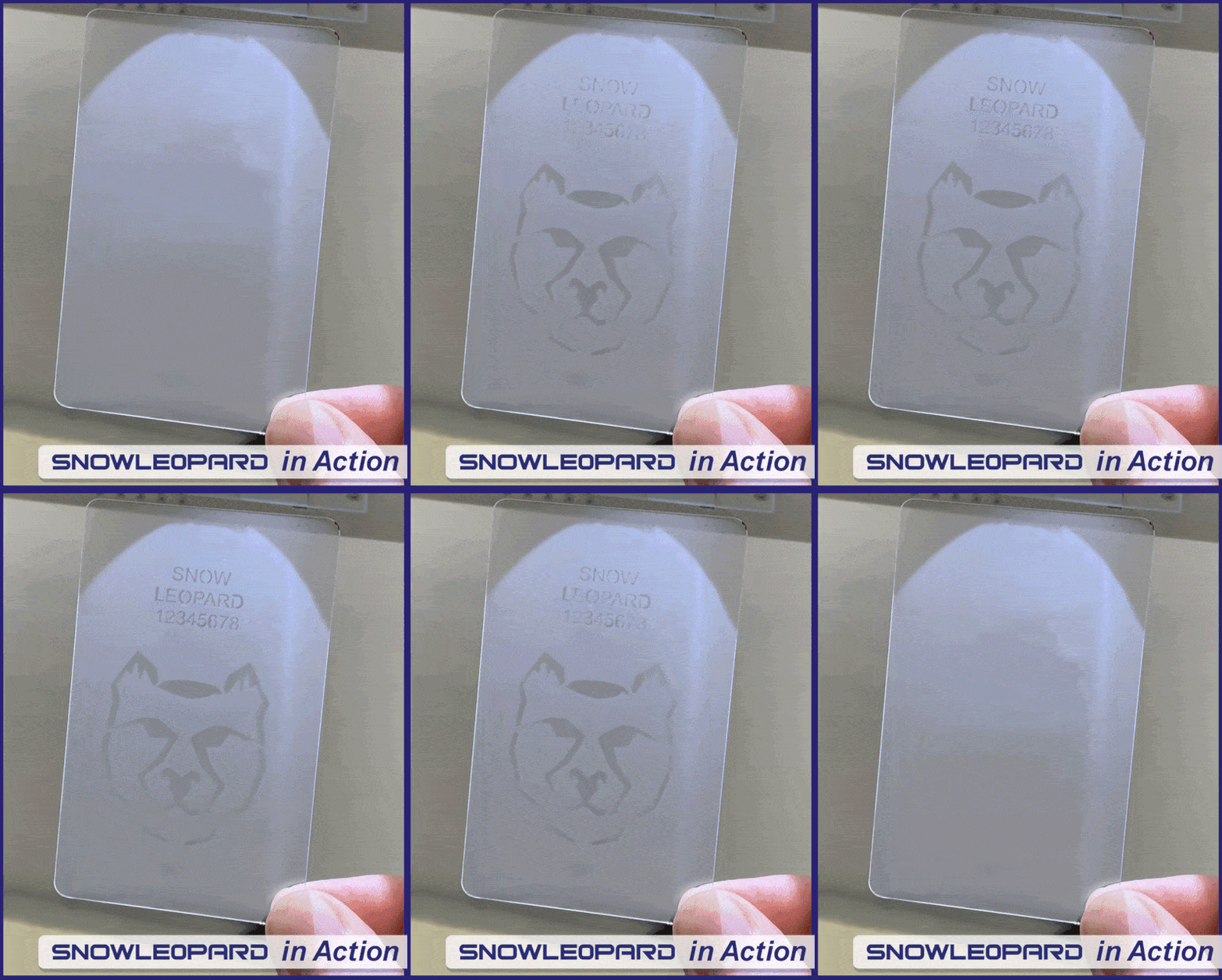
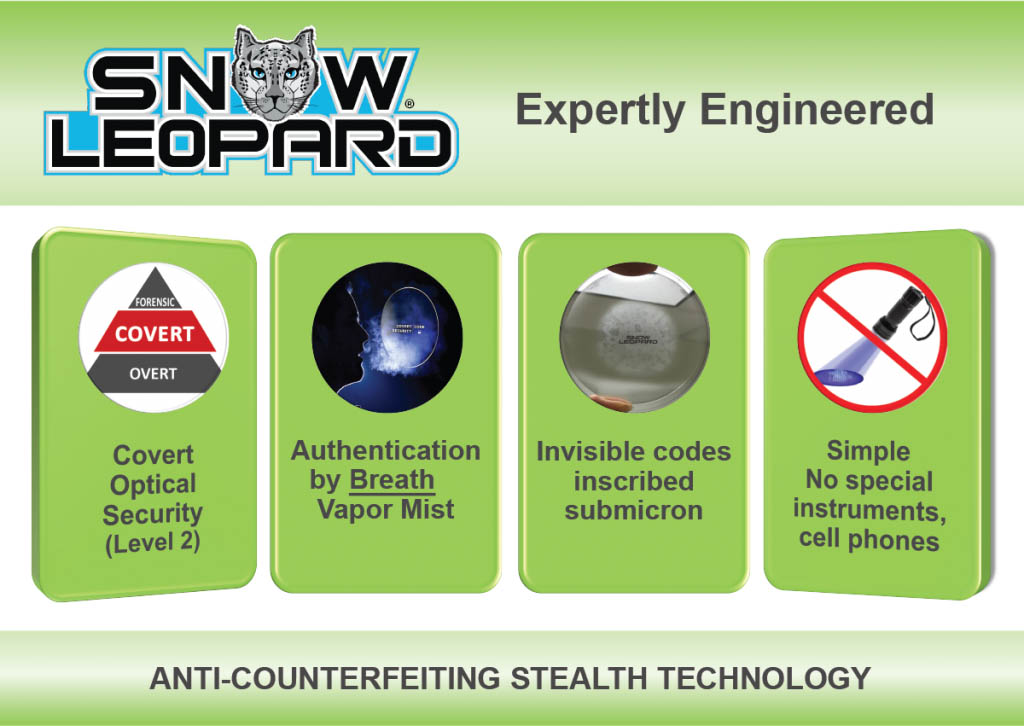
SNOWLEOPARD is a covert-overt authentication technology designed around the weaknesses above: the feature is engineered into the product rather than applied as a separate carrier that can be lifted, copied or reapplied. The site sets out a direct comparison against traditional approaches and how secure the common alternatives actually are.
